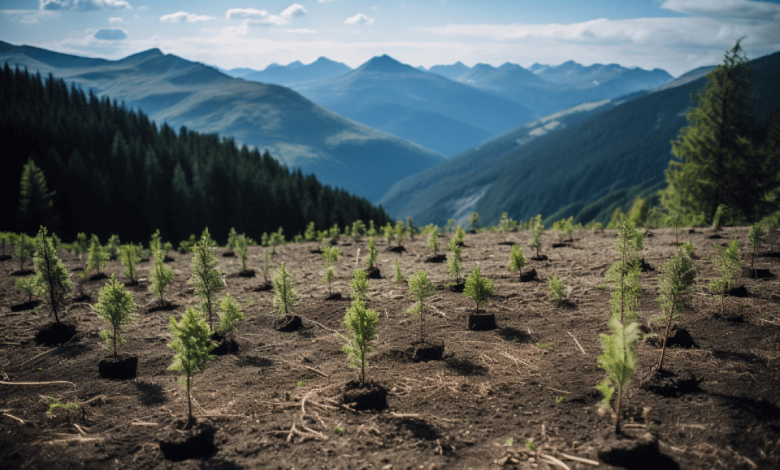
Reforestation is a critical strategy in combating climate change and restoring degraded ecosystems. Incorporating biochar into reforestation projects has emerged as a promising approach to enhance tree growth, improve soil health, and increase carbon sequestration.
Benefits of Biochar in Reforestation
- Enhanced Tree Growth: Studies have demonstrated that biochar amendments can significantly boost tree biomass. A meta-analysis revealed an average 41% increase in biomass following biochar application, with tropical species showing more pronounced responses than temperate species. Deciduous hardwoods benefited more than conifers, particularly in low-carbon or contaminated soils.
- Improved Soil Health: Biochar enhances soil structure, water retention, and nutrient availability, creating favorable conditions for tree establishment and growth. Its application has been linked to increased soil water-holding capacity, benefiting reforestation efforts on degraded lands.
- Carbon Sequestration: As a stable form of carbon, biochar contributes to long-term carbon storage in soils, aiding climate change mitigation efforts. Its integration into forest soils is a rapid method to increase soil carbon and mitigate atmospheric greenhouse gases, particularly CO₂.
Case Studies and Applications
- Forest Restoration in Western States: In the western United States, biochar production from forest residues has been utilized to support forest and grassland restoration projects. This approach offers a market-based solution for implementing restoration initiatives, enhancing soil health, and reducing wildfire risks.
- Non-Timber Forest Products (NTFP) Enrichment: Research indicates that biochar amendments in secondary forests enriched with NTFPs resulted in a 29% increase in aboveground biomass. This finding underscores biochar’s potential to enhance forest productivity and sustainability.
Considerations for Implementation
- Biochar Quality: The properties of biochar, influenced by feedstock and production conditions, affect its efficacy. Selecting appropriate biochar types is crucial for achieving desired outcomes in reforestation projects.
- Application Rates: Determining optimal biochar application rates is essential to maximize benefits without adverse effects. Tailored application strategies should consider specific site conditions and tree species requirements.
Conclusion
Integrating biochar into reforestation projects presents a viable strategy to enhance tree growth, improve soil health, and sequester carbon. By adopting biochar applications, reforestation initiatives can achieve greater success, contributing to sustainable forest management and environmental conservation.
Sources:
- Biochar’s impact on tree growth – Carbon Gold
- Biochar potential to enhance forest resilience, seedling quality, and nursery efficiency
- Biochar utilization as a forestry climate-smart tool
- Biochar for Forest Restoration in Western States | Fact Sheets
- Biochar effects on NTFP-enriched secondary forest growth and soil properties
- The Influence of Biochar Soil Amendment on Tree Growth and Soil Properties: A Meta-Analysis