Gardener’s Guide to Biochar Application


Biochar is a carbon-rich soil amendment that’s gaining renewed attention among gardeners, farmers, and environmentalists for its powerful benefits to both plants and the planet. Experiencing a modern resurgence due to its potential to improve soil health, boost crop yields, and combat climate change, biochar is being recognised for its sequestration capability, as well as soil enhancement properties. Heating organic materials like wood or crop waste in a low-oxygen environment through pyrolysis processes, biochar acts like a sponge in the soil, holding water, nutrients, and creating a habitat for beneficial microbes, from one application.
Why Use Biochar in Your Garden?
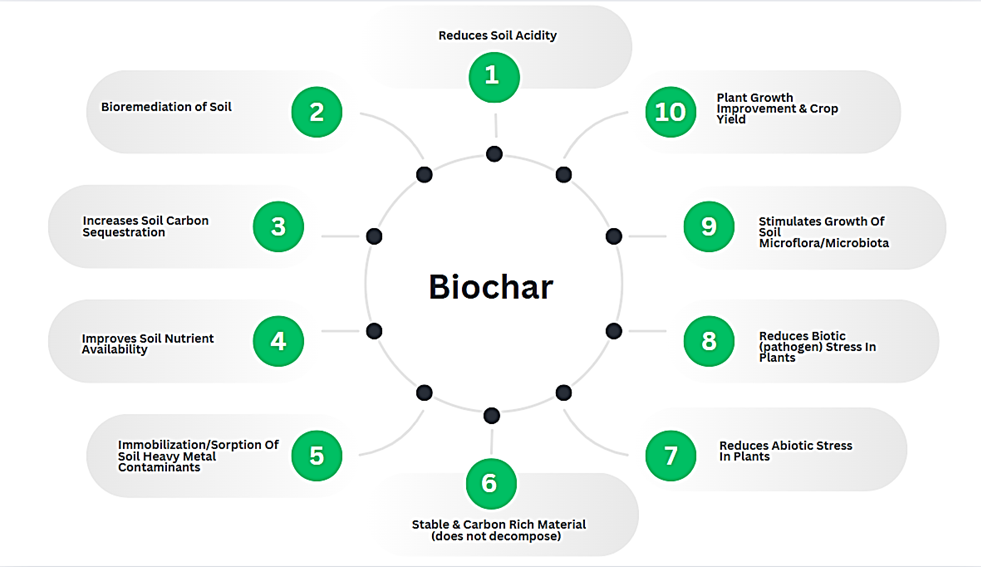
Improves Structure & Remediates Soil
Biochar’s porous, sponge-like texture helps loosen compacted soil, allowing roots to grow freely in enhanced agronomic conditions. It also increases the soil’s ability to hold water and air—two integral components that allow plants to thrive. This is especially valuable in sandy or heavy clay soils.
Enhances Nutrient Retention
One of biochar’s most important features is its ability to retain nutrients like nitrogen, phosphorus, and potassium. These nutrients often leach away with rain or watering, but biochar keeps them available in the root zone, reducing the need for frequent fertilization.
Supports Beneficial Microbes
Its vast surface area and internal pore network create the ideal environment for beneficial bacteria and fungi, which play a crucial role in breaking down organic matter and making nutrients accessible to plants.
Increases Crop Yields
By reducing environmental stressors and improving water retention, nutrient availability, and microbial activity, biochar remediates soil and creates the ideal opportunity for better plant growth. Gardeners often report stronger plants, more abundant flowers, better root traits, and higher yields of fruits and vegetables.
Reduces Soil Acidity
In acidic soils, biochar can help raise pH levels, creating a more balanced environment for plant roots. This is particularly beneficial in regions with naturally acidic conditions or in gardens where chemical fertilizers have lowered the pH over time. With more neutral soils, plant health is improved, with better drainage and nutrient retention.
Sequesters Carbon
Perhaps biochar’s most impressive trait is its environmental impact. It locks carbon into the soil for centuries. This makes it a powerful tool in climate change mitigation by adsorbing atmospheric carbon and storing it safely underground.
Doesn’t Decompose
Unlike traditional organic growing media, such as compost or peat, which break down quickly and release significant amounts of greenhouse gases (CO₂, CH₄, N₂O) into the atmosphere, biochar actively removes harmful emissions from the atmosphere, sequestering carbon in soil for centuries.
https://pmc.ncbi.nlm.nih.gov/articles/PMC9130403
Top Tips for Effective Biochar Application:
Charge or Activate the Biochar
Raw biochar can initially pull nutrients out of the soil if added uncharged. You need to “charge” it with nutrients and microbes.
Ways to charge biochar:
- Mix with compost: Combine biochar with finished compost and let it sit for 2–4 weeks.
- Soak in compost tea or mix in inoculant powder for 24–72 hours.
- Blend with manure and age it for a couple of weeks.
- Soak in a liquid fertilizer (organic or synthetic) for the quickest results.
Incorporate Into Your Soil
Once charged, you can add it to your garden:
Application rates:
- General garden use: 5–10% biochar by volume of soil or compost.
- Per square meter (1 sq. yard): about 1–2 cups of charged biochar.
- Pots and containers (>10m₂) : 5–10% of total potting mix.
How to apply biochar:
- Mix into top 6–12 inches of soil.
- Use during bed prep, transplanting, or when turning over soil in the spring or autumn.
- Water well after application to ensure the biochar has integrated into the soil profile.
Observe and Adjust
- Biochar builds long-term soil fertility. You may not see big changes immediately, but benefits compound over time.
- Combine with other organic amendments for best results (e.g., compost, mulch, worm castings).